Fried chicken has always been a favorite meal of mine, but the grease is not something I’m willing to ingest any more. With that in mind, I started looking for better ways of making fried chicken a few years ago. And while many people will bake their “fried” chicken, I’m more of a purist. Clearly the chefs of the world (and many home cooks) have known for decades that getting your meat to soak up “something else” makes it unable to soak up grease when it’s frying, but I didn’t. If you are like I was, there are two main ways to prep your chicken. One is to brine it and the other is to soak it in buttermilk. Now, I love to brine a chicken or turkey but it adds a lot of salt to the chicken; and that’s not what I want to add to my fried chicken, so soaking in buttermilk is the best choice. If you prefer brining, please do so and enjoy. If you are like me, well, keep on reading. And Happy Eating!
Ingredients – Chicken Preparation
- Buttermilk, enough to cover all the chicken you are preparing
- Chicken, a mix of breasts, thighs, drumsticks and wings (at least 2 lbs)
Ingredients – Coating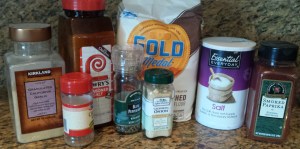
- Flour, 3 cups
- Garlic powder, 1 T
- Onion powder, 1 T
- Celery salt, 1 tsp
- Lawry’s Seasoned Salt, 2-1/2 T
- Ground pepper, 12 cranks
- Table salt, 1 T
- Paprika, 1 T
Instructions – The Night Before
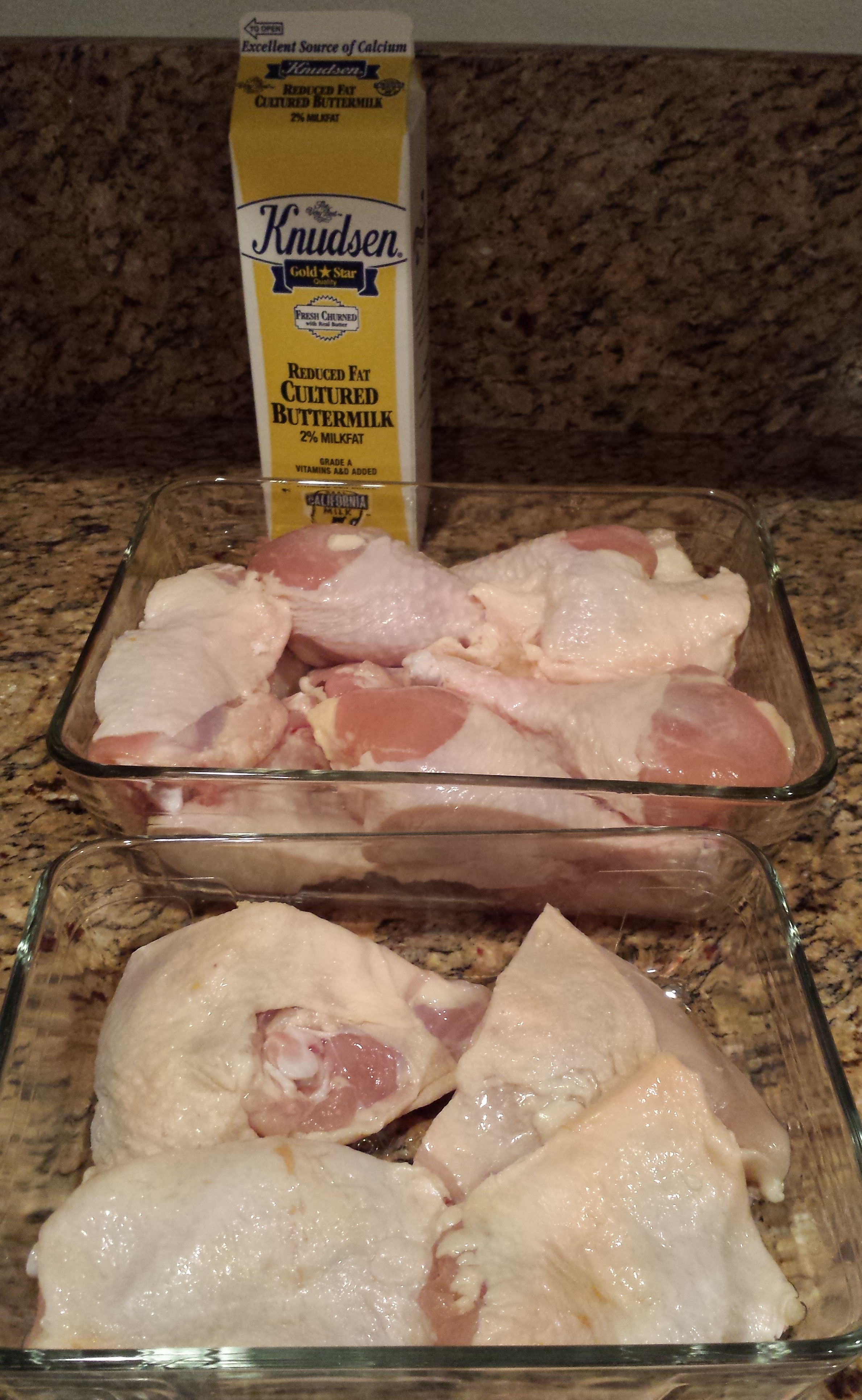
- The night before (or at least 4 hours before cooking), rinse chicken, pat dry with a paper towel and place in glass dish. Pour buttermilk to cover the chicken. Cover and place in the refrigerator.

Instructions – Frying The Chicken
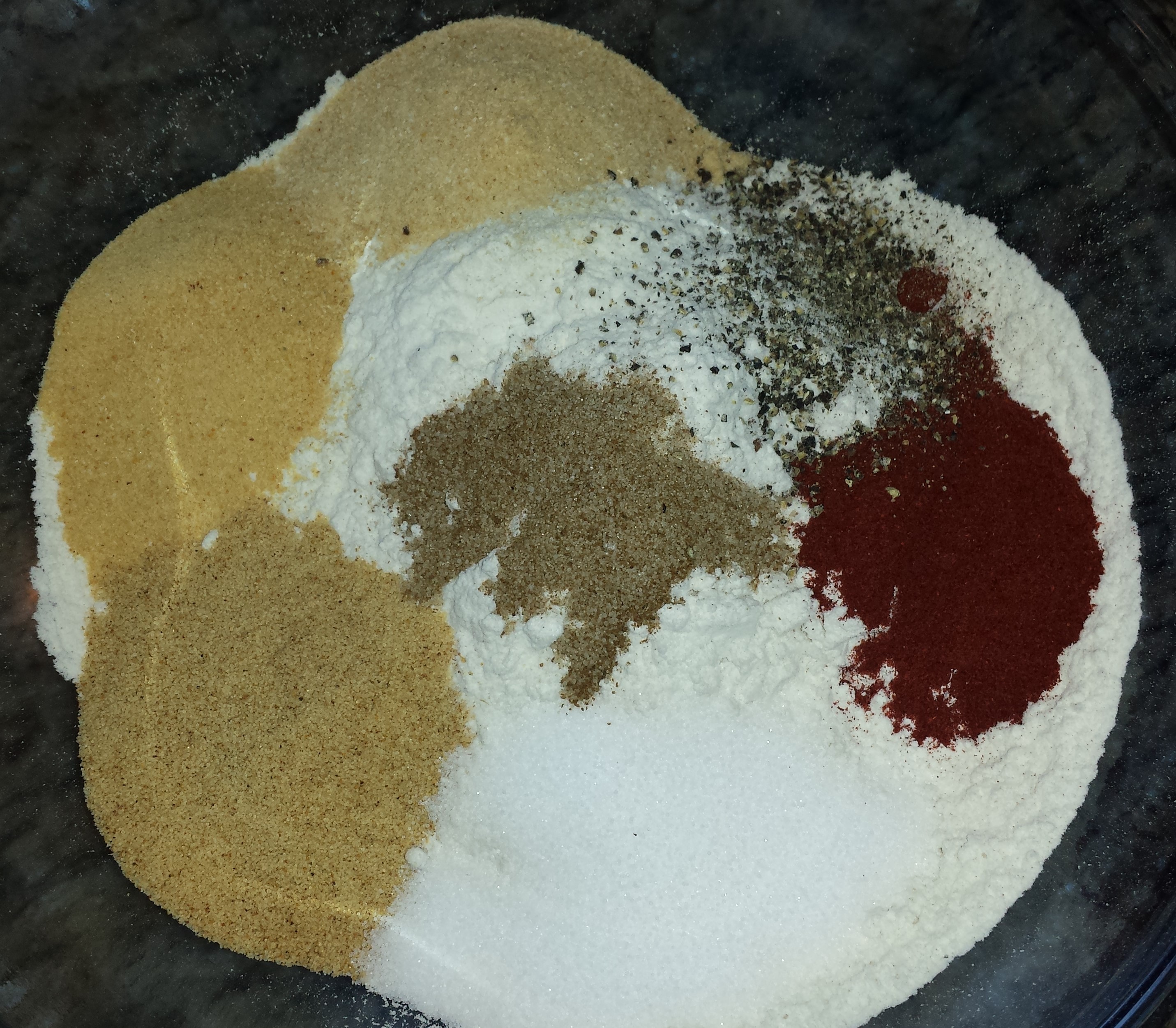
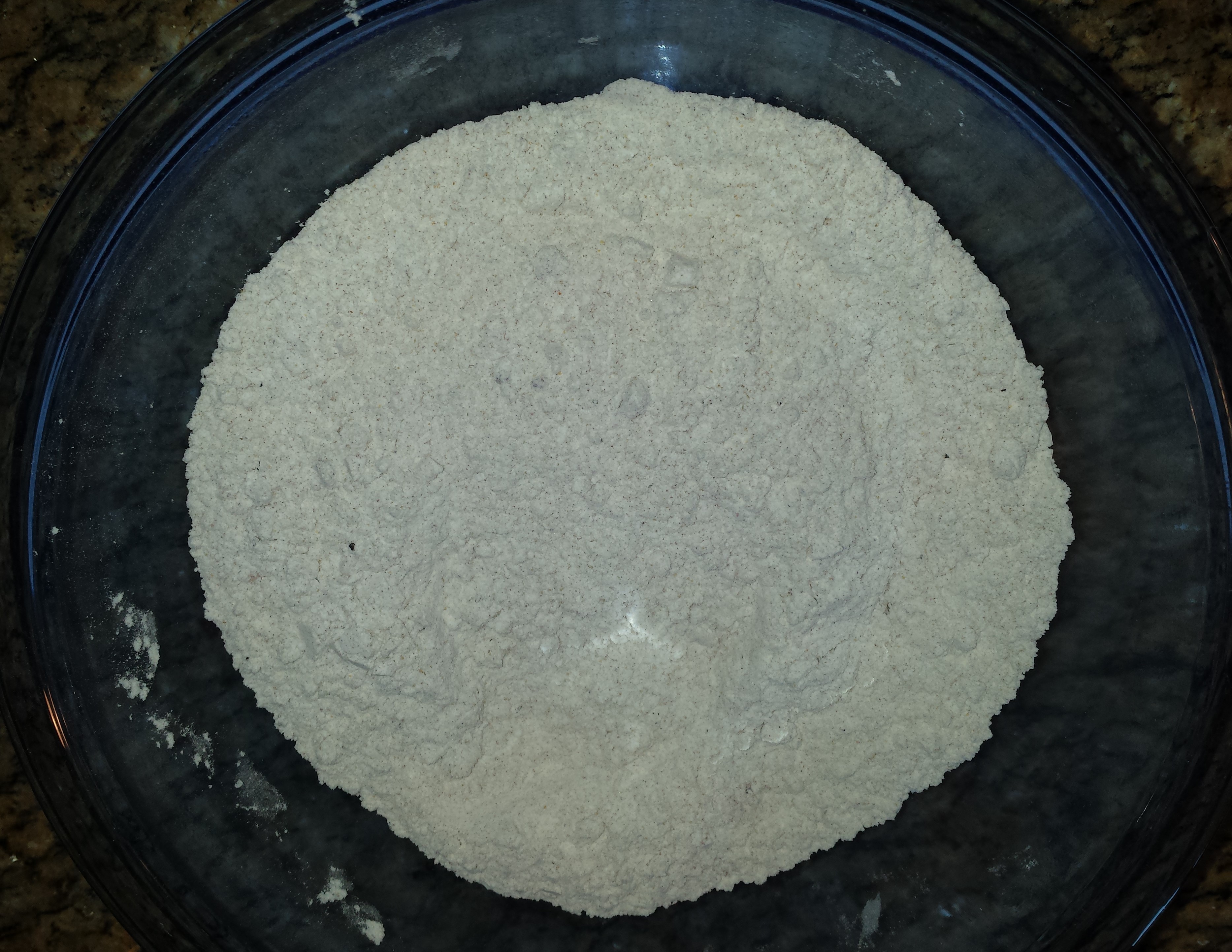
- In a large glass bowl, add 3 cups of flour. Then add all the other “coating” ingredients and mix well. To ensure that you will have a tasty coating to your chicken, take a pinch out and taste it. If you don’t feel that there’s enough flavor, feel free to add other spices to your coating.

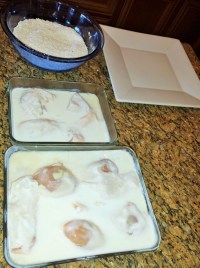
- Set up your coating assembly line: large plate for coated chicken, large bowl with coating mix and chicken in buttermilk.
- Put on some gloves (if you have them). Grab your first piece of chicken and hold above the buttermilk so that excess buttermilk will drain off.
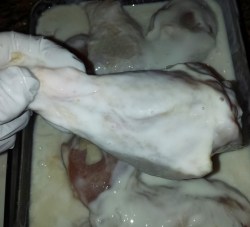
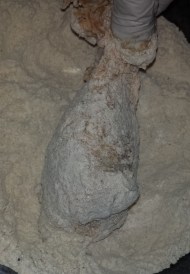
- Place chicken in coating mix and make sure to coat evenly over the entire chicken.
- Then place on large plate.
- Repeat.

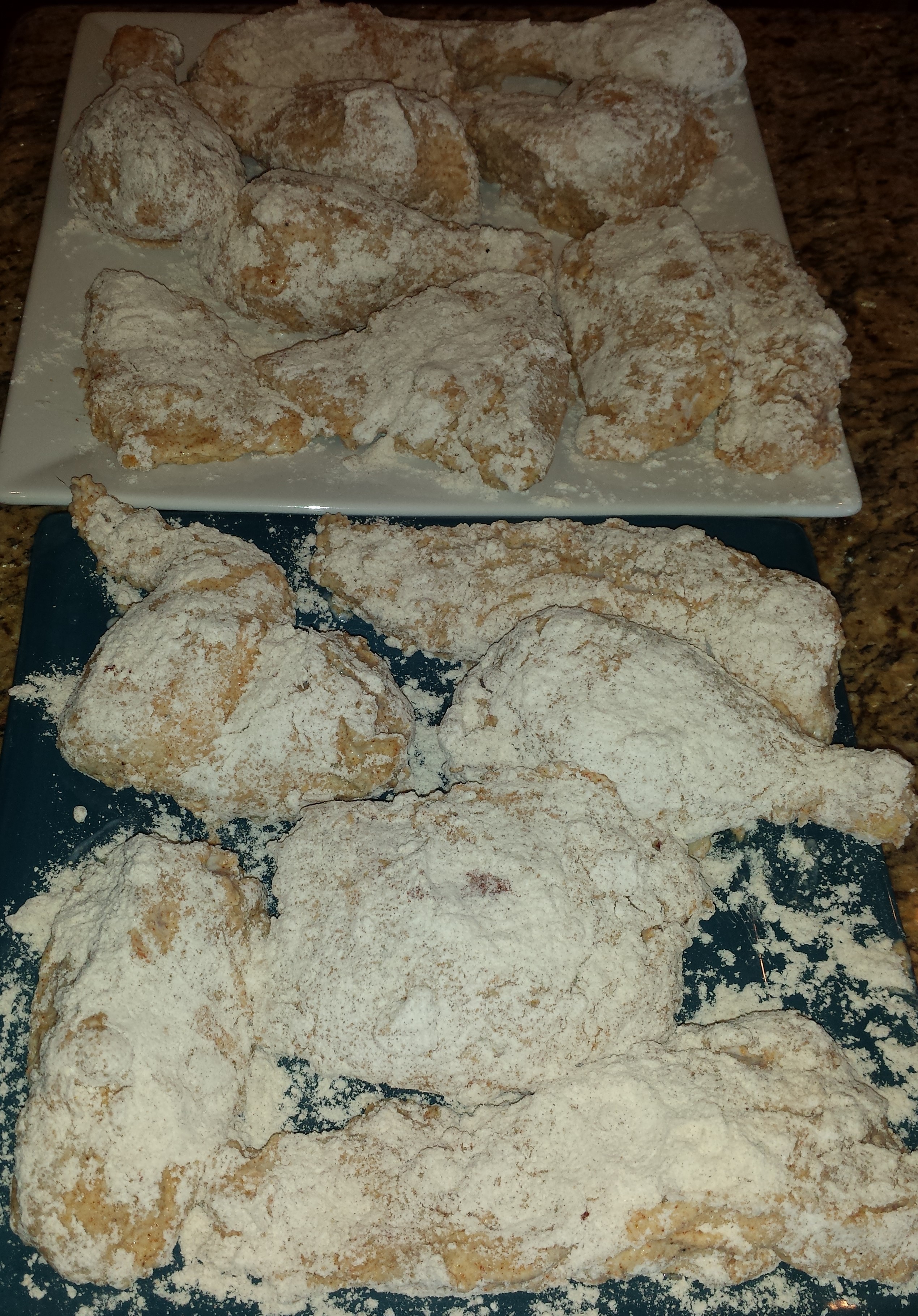
- It’s important to have some separation between chicken pieces on the plate just as it’s important to give your chicken time to dry before adding to the oil.
- Let chicken dry for at least 5 minutes. While chicken is drying prepare the stovetop for frying.
- In a cast iron skillet, add a couple of inches of oil (canola or vegetable).
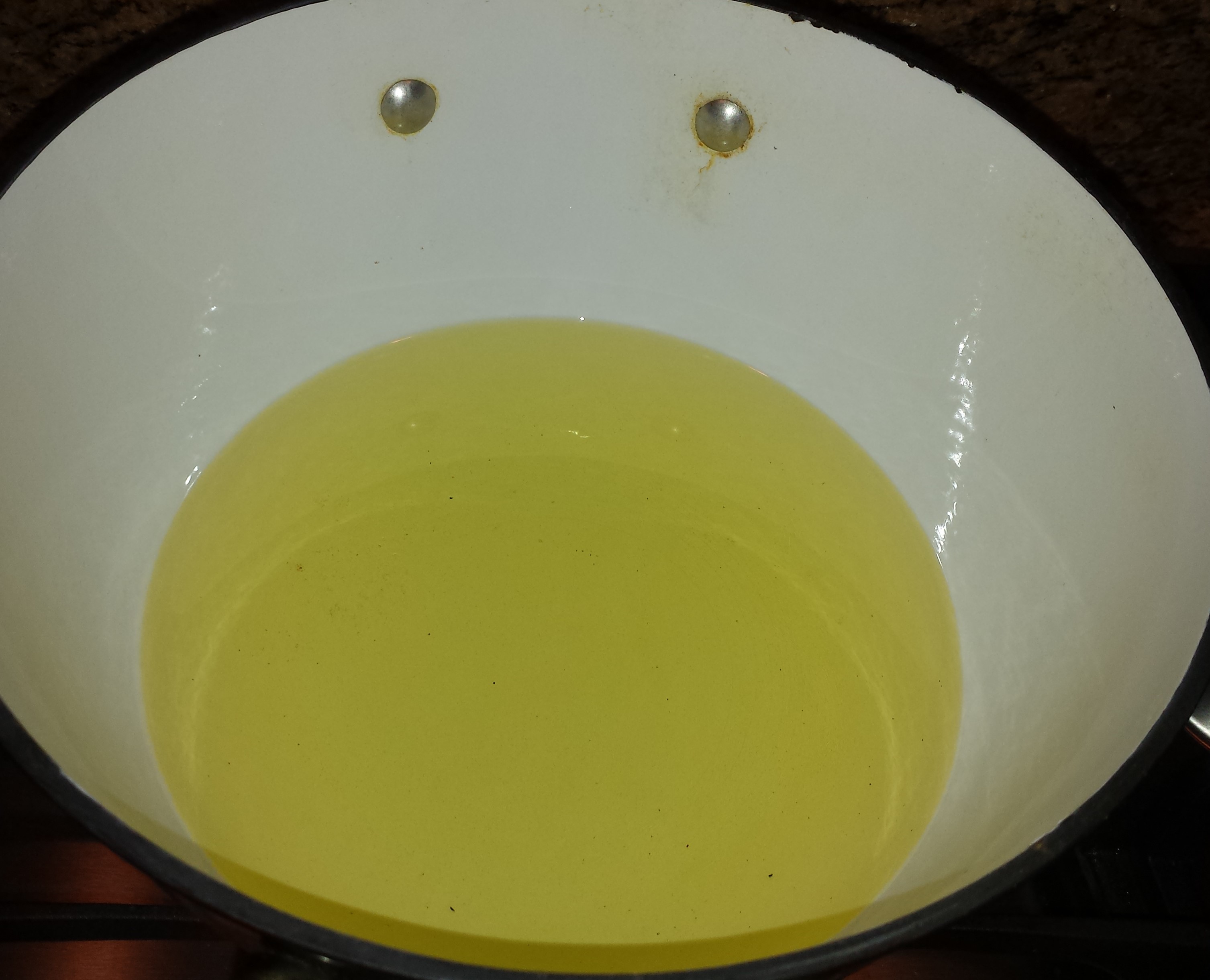
- Turn heat to medium high. Heat to 375 degrees or until ready to start frying (get your thumb and index finger wet and then flick a dash of water into the oil. If it sizzles, it’s time to add the chicken.)
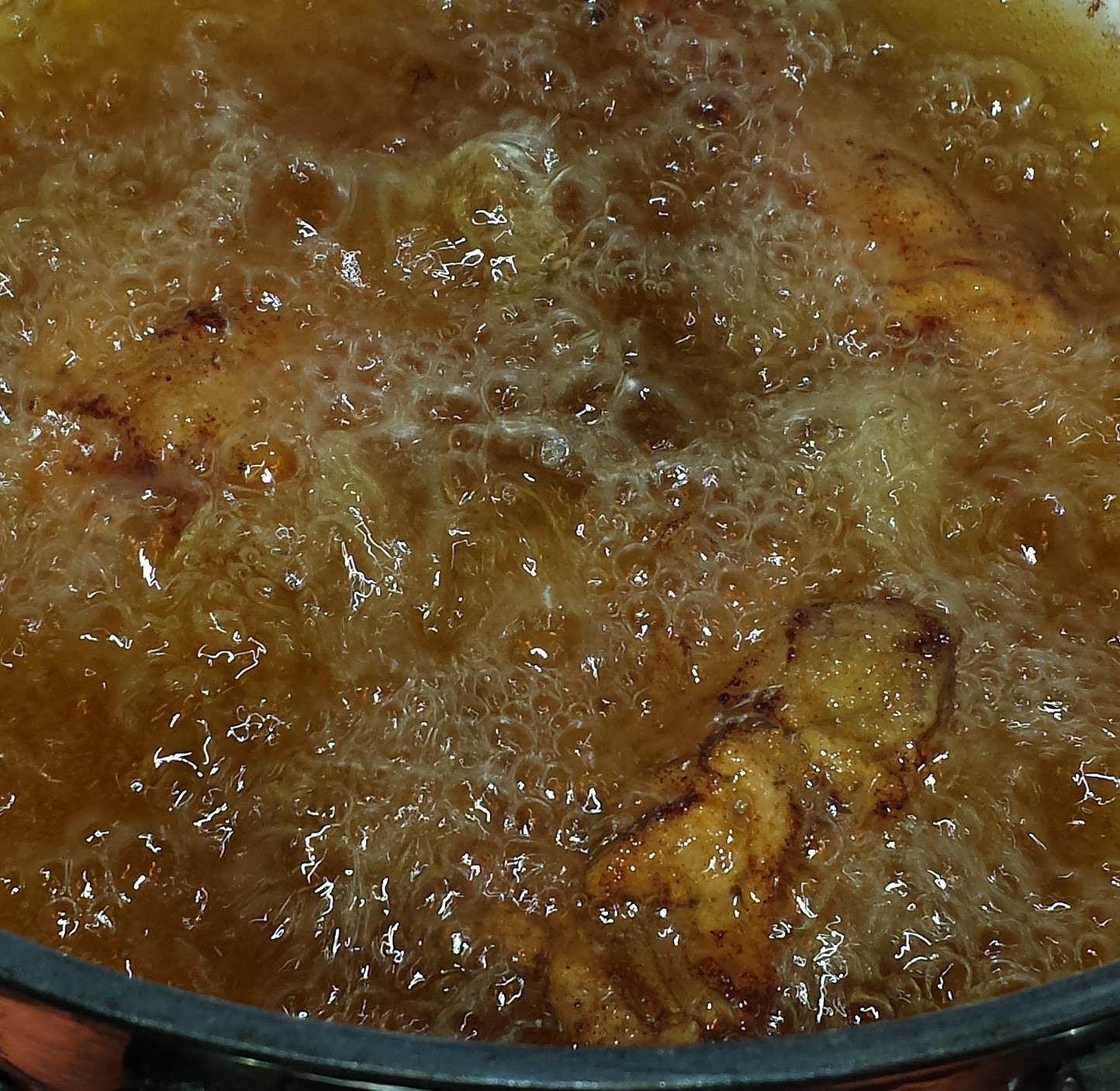
- With tongs, grab chicken and add to the skillet. Keep the pieces apart so they cook more evenly. I usually have only 3 or 4 pieces cooking at a time in my skillet, but it is smaller. Use a splatter cover, if you have one.
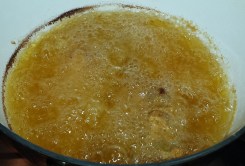
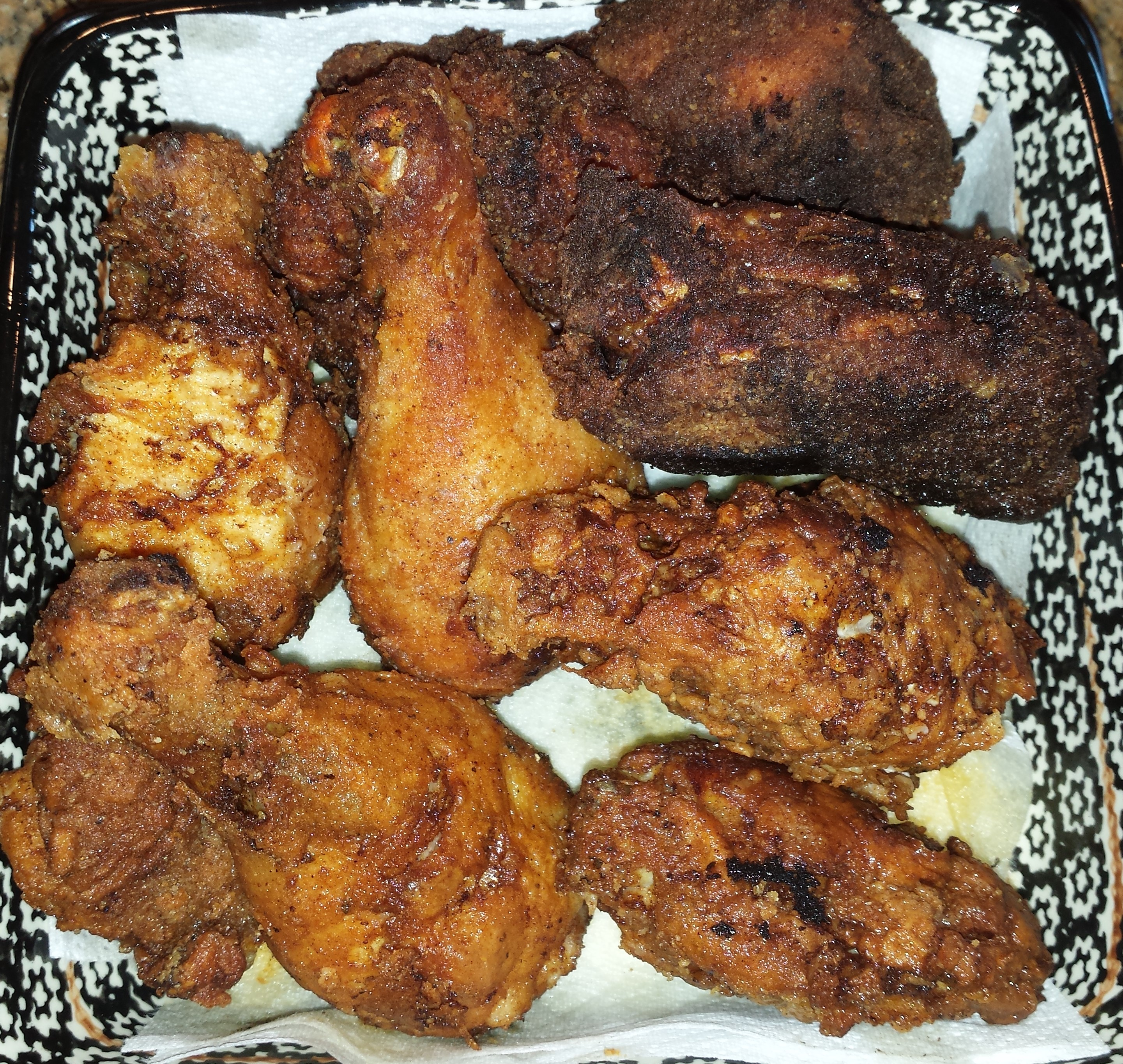
- After about 5 minutes, turn the chicken. Check the chicken again in another 5 minutes. Cook until they are a nice golden brown, or darker (like some of my pieces) if you like them cooked well.
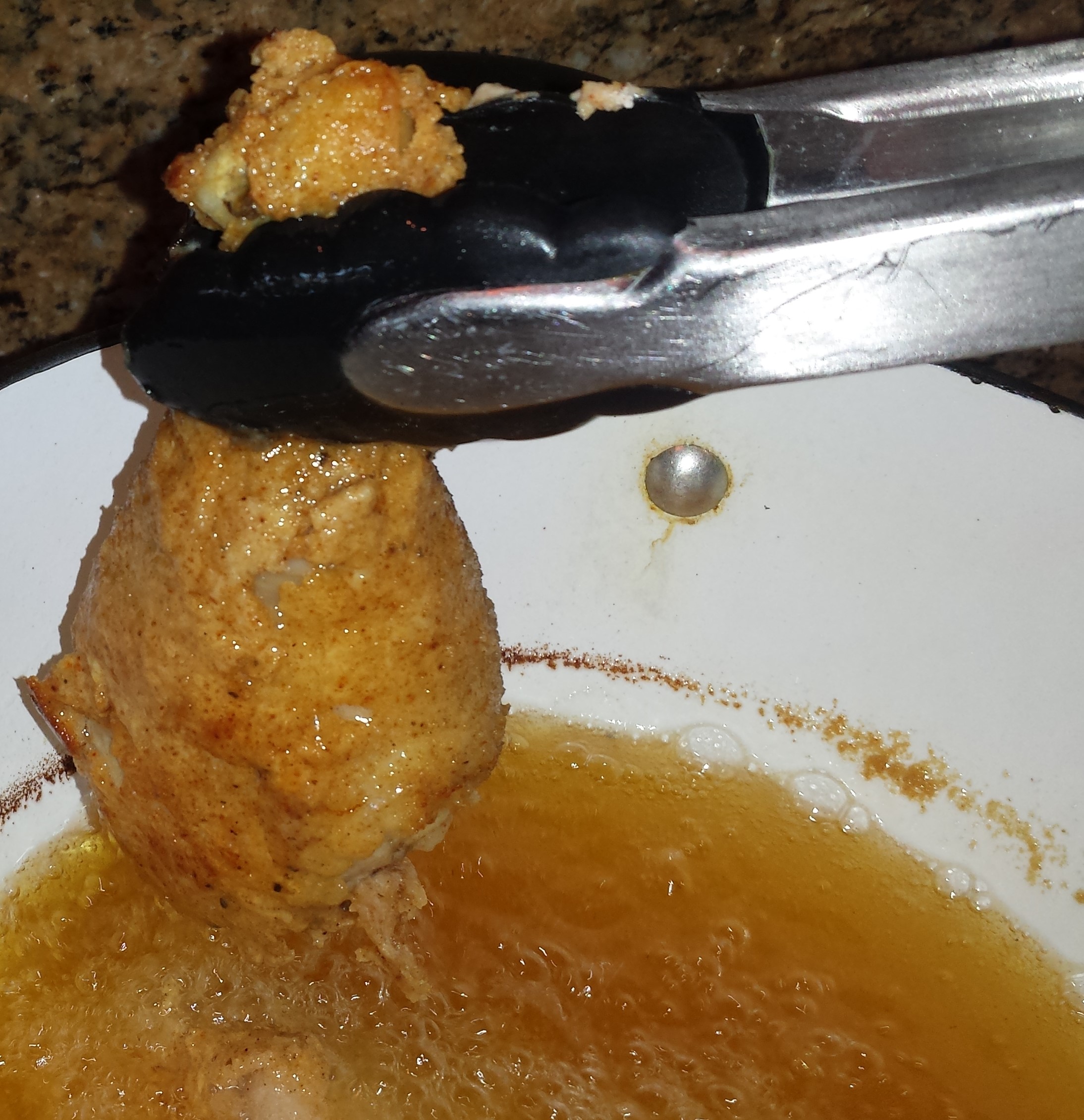
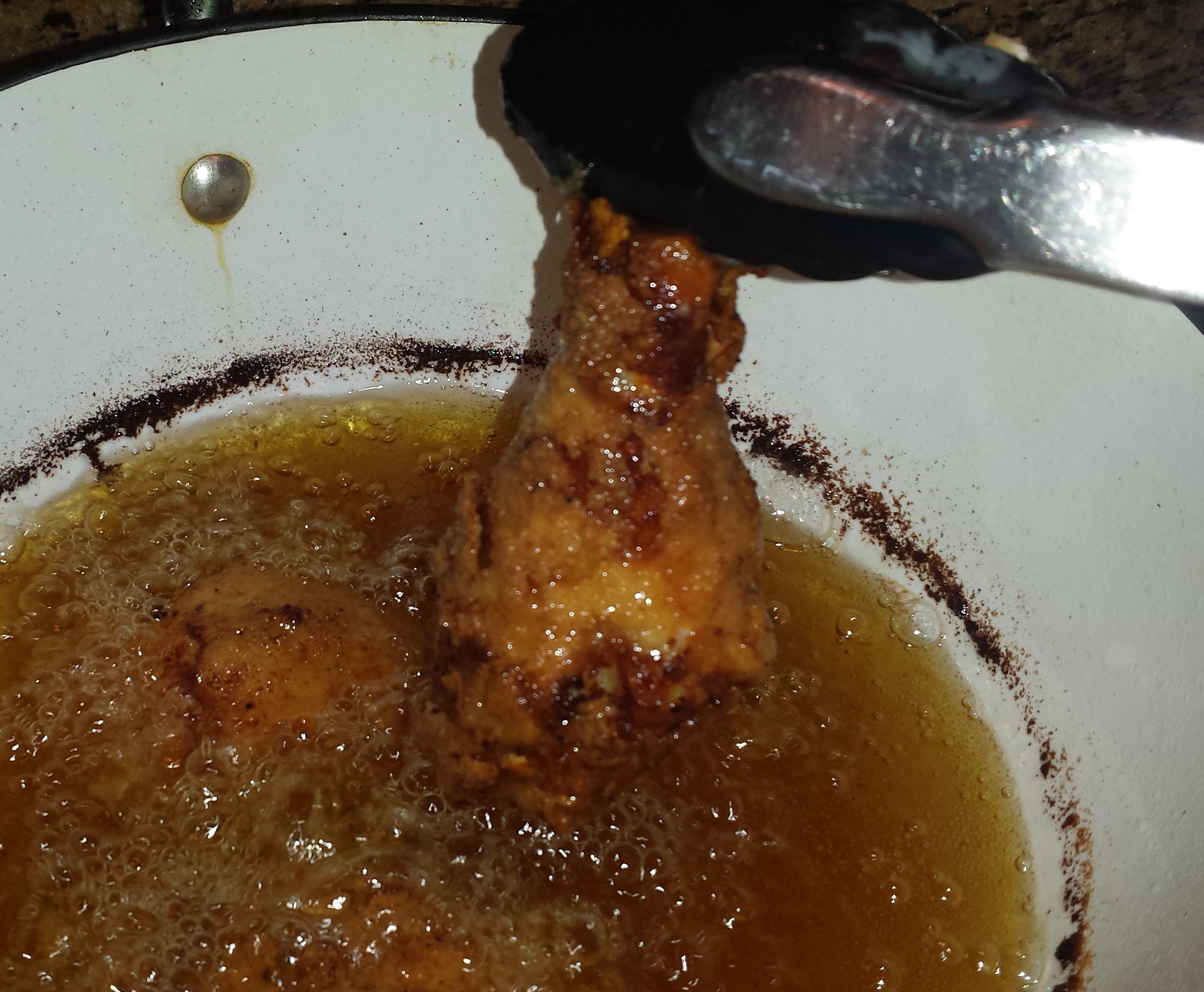
- Remove from oil, let drain over the skillet, then place in a paper towel lined dish.
- Repeat until all of the chicken is cooked. Serve and enjoy!
Ideas
- Cast iron skillet – If you don’t have one, that’s OK. Use whatever you have available, but do consider buying one for the future as your food will cook more evenly and quicker.
- Chicken prep – You can add some pepper and salt to the buttermilk mixture if you’d like. It’s not necessary, but a lot of people prefer to do so.
- Glass – I always use glass bowls and dishes when working with uncooked chicken. It’s easier to clean and ultimately safer for you and your family.
- Paprika – There are a lot of different types of paprika on the market. I prefer smoked because I like the depth of flavor, but do you whichever you prefer.
- Salt – for those with salt issues, leave out the last tablespoon of salt from the recipe.
- Need a little kick? My family doesn’t like their food very spicy, so I do not add cayenne pepper to my coating. If you do like spicier, feel free to add at least 2 tsp to the coating mix.
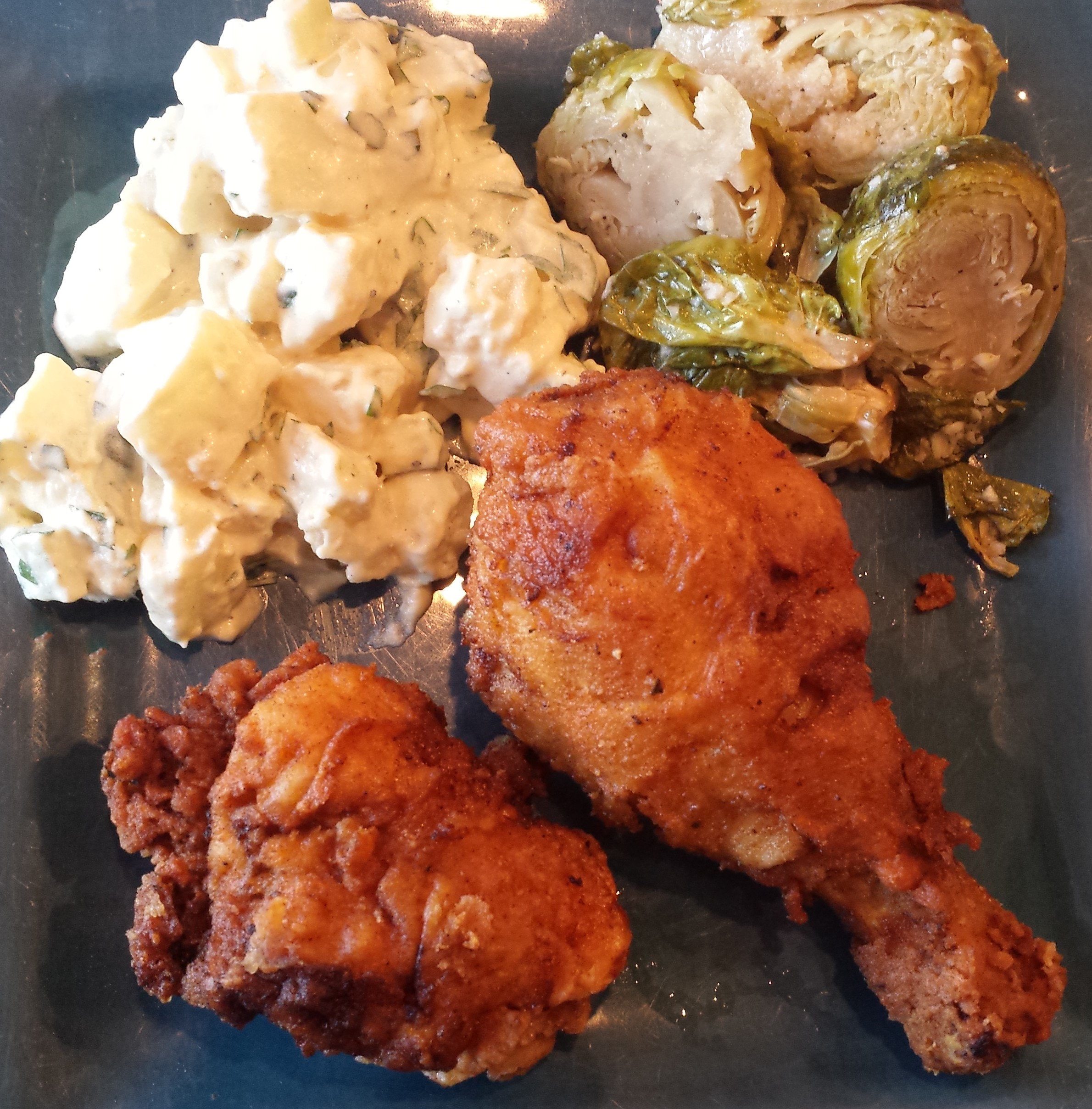
- Serving – Enjoy a nice potato salad and some vegetables with your homemade fried chicken.


 Not So Scientific Gourmet